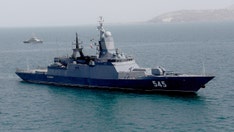
Escalating tensions between the United States and Iran are reviving a risk energy markets have long feared: a potential closure of the Strait of Hormuz, the narrow Gulf passage that carries roughly 20 percent of global LNG trade and 25 percent of seaborne oil.
New modelling from energy analytics firm ICIS suggests that a three-month disruption would send European benchmark gas prices sharply higher and strain storage levels heading into winter.
US-Iran nuclear talks are continuing this week after previous meetings failed to produce a breakthrough.
Meanwhile, the US has increased its military posture in the Gulf region, redeploying a carrier strike group to the Northern Arabian Sea. Iranian Revolutionary Guard forces have conducted drills in the Strait of Hormuz and tested a temporary blockage of the sea passage, with officials publicly raising the possibility of closing the route to international traffic.
Oil markets have already begun reacting to the rising geopolitical risk.
Prices climbed to seven-month highs as traders positioned ahead of renewed US-Iran nuclear talks. US crude futures rose to as high as US$67.28 per barrel to start this week, while Brent crude reached US$72.50, its highest level since July 31, 2025, before easing later in the session.
Disruption scenario points to sharp market shock
The ICIS postures that the strategic importance of the strait is difficult to overstate. A prolonged closure would disrupt a quarter of global seaborne oil flows and a fifth of LNG trade. For Europe, the most immediate impact would be the loss of Qatari LNG volumes that transit the Gulf.
To assess the potential impact, ICIS modelled two scenarios: a base case reflecting current market conditions, and a disruption case assuming no contracted Qatari LNG imports to Europe until the end of May—a 102-day halt combined with a 131 terawatt-hour (TWh)reduction in spot LNG volumes over 90 days.
Under the disruption scenario, the Dutch TTF front-month contract, which is Europe’s gas benchmark, would jump toward 92 euros per megawatt hour, averaging around 86 €/MWh during the 90-day blockade.
This price point hovers substantially above the base case and far exceeds the price response in ICIS’ cold-winter scenario, which resulted in roughly a 20 percent increase in some Eastern European markets.
Furthermore, a three-month interruption of Qatari LNG would represent a supply shock of roughly 14 percent during the period, even before accounting for missing spot cargoes.
According to ICIS, that scale of disruption would likely drive the European gas balance into shortage territory.
“We see Europe has simultaneously allowed strategic buffers like gas storage levels to erode to dangerously low levels at a critical moment in global affairs,” said ICIS editor Ghassan Zumot.
Even with elevated prices, not all demand in Central and Eastern Europe could be easily met while still complying with mandated EU storage targets. In the disruption scenario, end-of-winter storage levels fall to about 244 TWh, compared with 275 TWh in the base case .
Under such conditions, the ICIS noted that competition between Asia and Europe for flexible LNG cargoes would also intensify.
Its modeling suggests that the marginal price during the blockade would be determined by the relative willingness-to-pay of Asian power systems during the summer cooling season versus Europe’s need to secure LNG for storage injections ahead of winter.
Volatile market meets gulf risk
The prospect of disruption in the Gulf adds fresh uncertainty to energy markets that have yet to stabilize.
“Throughout the year, prices have continued the downtrend they began in April (2024) as OPEC+ continued to hike output and China’s economy continued to struggle under the weight of a flailing property sector, downbeat consumer confidence, overindebted local governments and flagging external demand,” he added.
US President Donald Trump’s on-again, off-again tariffs also injected uncertainty into markets. “We can see that Trump’s ‘Liberation Day’ tariffs pushed prices down to a level from which they’ve not recovered from, barring a spike in June as a result of the 12 day Iran-Israel war,” Cunningham said.
Despite current perceptions of abundant oil supply with floating inventories hovering around a billion barrels, analysts caution that geopolitical disruptions could quickly alter the balance.
“The real question is not if oil and gas production will increase, but by how much,” Cunningham said, noting that production forecasts have been revised higher in response to OPEC+ output hikes and strong US LNG demand. At the same time, tensions within OPEC+ and sanctions on Russia could complicate supply trajectories.
For Europe, the immediate vulnerability lies in gas. The continent has made significant strides since 2022 in diversifying supply routes and expanding LNG import infrastructure.
However, a closure of the Strait of Hormuz would instantly test those gains.
Securities Disclosure: I, Giann Liguid, hold no direct investment interest in any company mentioned in this article.